Proof has been found of the existence of human settlements in the 2nd and 6th centuries BC in the Santa Lucia chapel area
Archaeologists working there have found man-made objects and other things made using lathes, which are presumed to be Phoenician in origin, according to the preliminary investigations they have carried out. As well as pottery, metal objects have also been found in some of the layers.
The Archaeology Department of the Provincial Diputación has carried out an archaeological dig around the Santa Lucia chapel, finding indications of the existence of up to two settlements.
Mayor of Alcala de Xivert, Francisco Juan Mars, explained that “over the years and after various refurbishments carried out at the chapel, fragments of pottery have been found, so we asked the Provincial Diputación Archaeology Department to carry out further investigations so that these pieces could be put on record”.
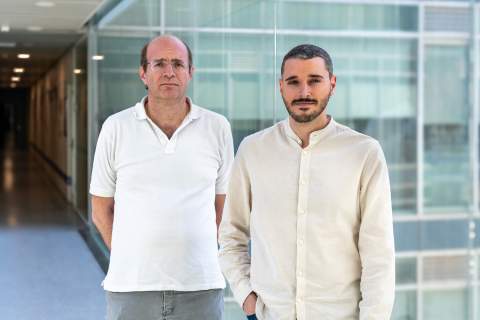
Archaeologist Gustavo Aguilella and local history and archaeology investigator, Rafa Ronchera, carried out a two-week field study, with the work ending on 27th June. The existence of several archaeological strata was already known as they had been exposed by erosion of the soil covering them, but this investigation yielded new information about the existence of human settlements.
In fact, they found indications of two layers, dating back initially to the 2nd and 6th centuries BC. Gustavo Aguilella, the archaeologist, said that “two very significant layers have been found, to the south of the chapel which was in a good state of conservation so that we could be certain that we had found the first settlement dating from the second millennium BC”. At another level in the excavations, a further settlement was found dating approximately from the 6th century BC where “we were able to recover a lot of pottery, almost intact, as far as we could see from our limited excavations” Aguilella explained.
The dig exposed man-made fragments and other pieces made on lathes, whose origin could be presumed to be Phoenician, according to preliminary investigations. As well as pottery, we found metal objects at these levels.
Now that the field work is completed, the huge task of investigation and analysis will start in the laboratory, which could take many months. “We will not only piece together the pottery fragments, but will carry out tests such as carbon 14, from which we will learn about other aspects of life in these settlements”, the Castellón Diputación archaeologist explained.
Archaeologists working there have found man-made objects and other things made using lathes, which are presumed to be Phoenician in origin, according to the preliminary investigations they have carried out. As well as pottery, metal objects have also been found in some of the layers.
The Archaeology Department of the Provincial Diputación has carried out an archaeological dig around the Santa Lucia chapel, finding indications of the existence of up to two settlements.
Mayor of Alcala de Xivert, Francisco Juan Mars, explained that “over the years and after various refurbishments carried out at the chapel, fragments of pottery have been found, so we asked the Provincial Diputación Archaeology Department to carry out further investigations so that these pieces could be put on record”.
Archaeologist Gustavo Aguilella and local history and archaeology investigator, Rafa Ronchera, carried out a two-week field study, with the work ending on 27th June. The existence of several archaeological strata was already known as they had been exposed by erosion of the soil covering them, but this investigation yielded new information about the existence of human settlements.
In fact, they found indications of two layers, dating back initially to the 2nd and 6th centuries BC. Gustavo Aguilella, the archaeologist, said that “two very significant layers have been found, to the south of the chapel which was in a good state of conservation so that we could be certain that we had found the first settlement dating from the second millennium BC”. At another level in the excavations, a further settlement was found dating approximately from the 6th century BC where “we were able to recover a lot of pottery, almost intact, as far as we could see from our limited excavations” Aguilella explained.
The dig exposed man-made fragments and other pieces made on lathes, whose origin could be presumed to be Phoenician, according to preliminary investigations. As well as pottery, we found metal objects at these levels.
Now that the field work is completed, the huge task of investigation and analysis will start in the laboratory, which could take many months. “We will not only piece together the pottery fragments, but will carry out tests such as carbon 14, from which we will learn about other aspects of life in these settlements”, the Castellón Diputación archaeologist explained.