The “Mirador Templario” route links the castles of Peñíscola, Santa Magdalena and Alcala de Xivert as a tourist attraction
![[Img #65985]](upload/img/periodico/img_65985.png)
Those keen on walking, nature and history, now have another reason to visit the Baix Maestrat: the “Mirador Templario” route which links the templar castles in the Baix Maestrat – Xivert, Pulpis and Peñíscola. The initiative is part of the Castellón Diputación Templar Territory programme, which uses the heritage weight of the Order of the Temple in the province to create a new tourism product which unites history and the hereditary, natural attractions. In the case of the Mirador Templario, it was decided to put signs along the 26kms long route, taking in the mediaeval and templar castles and historic forts, beginning at the Xivert castle, continuing to the Pulpis castle and ending at the Peñíscola castle. The itineraries, with extraordinary views, runs right through the Sierra d’Irta natural park – another of the attractions where you can always see typical examples of the area’s botanical flora and scenic heritage – and already there are various facilities at different points along the route, with information panels in the three town centres and panoramic viewpoints. It is calculated that the complete walk will take 7 hours 45 minutes.
This new route will also encourage tourism and financial benefits in the towns of Alcala de Xivert-Alcossebre, Santa Magdalena de Pulpis and Peñíscola.
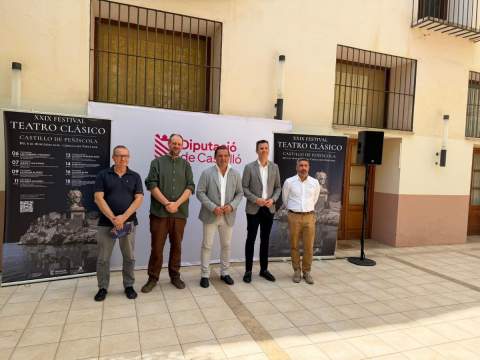
On 26th April, a presentation was given in the CESAL in Alcala during which the Diputación vicepresident and Culture deputy, Vicent Sales, spoke of “the importance of the Diputación’s initiatives such as this, to provide structure, socialise and make unique and attractive facilities available to residents and visitors”. The Mayor Franciso Juan emphasised that “the interest of the Diputación in giving value to our heritage with an action like this, satisfying all three towns”. Also in attendance at the event were the Environment deputy, Antonio Cases, Belén Salvador, representing the company which has developed the path, the director of the Sierra d’Irta Natural Park, Aurora Quero, and the mayors of Santa Magdalena, Serfio Bou, and Peñíscola, Andrés Martínez.
Vicent Sales explained that “doing this is a continuation of the Peñíscola Castle Management Plan in which we proposed giving value to the Templar forts and at the same time using all and every opportunity provided by the most visited monument in our province to link to the rest of the towns in Castellón which are related. It was precisely in national and international interest that the Diputación took the initiative to create this tourist-cultural route created by the Order of the Temple”.
It was the historic investigations carried out under the Peñíscola Castle Management Plan which were the origins of this historical and heritage interest in the passage of the Order of the Temple through the Castellón region and how, going beyond the walls of the castle, they spread to different places in the province which have a valuable documented historical and cultural legacy around this theme. Working with the staff of the Natural Park, the Diputación, through the “Mirador Templario” route, has not only identified and analysed the heritage element linked to the époque, but at the same time has put unique natural spaces on display like the Sierra d’Irta which brings new attractions to spreading the heritage project.
Those keen on walking, nature and history, now have another reason to visit the Baix Maestrat: the “Mirador Templario” route which links the templar castles in the Baix Maestrat – Xivert, Pulpis and Peñíscola. The initiative is part of the Castellón Diputación Templar Territory programme, which uses the heritage weight of the Order of the Temple in the province to create a new tourism product which unites history and the hereditary, natural attractions. In the case of the Mirador Templario, it was decided to put signs along the 26kms long route, taking in the mediaeval and templar castles and historic forts, beginning at the Xivert castle, continuing to the Pulpis castle and ending at the Peñíscola castle. The itineraries, with extraordinary views, runs right through the Sierra d’Irta natural park – another of the attractions where you can always see typical examples of the area’s botanical flora and scenic heritage – and already there are various facilities at different points along the route, with information panels in the three town centres and panoramic viewpoints. It is calculated that the complete walk will take 7 hours 45 minutes.
This new route will also encourage tourism and financial benefits in the towns of Alcala de Xivert-Alcossebre, Santa Magdalena de Pulpis and Peñíscola.
On 26th April, a presentation was given in the CESAL in Alcala during which the Diputación vicepresident and Culture deputy, Vicent Sales, spoke of “the importance of the Diputación’s initiatives such as this, to provide structure, socialise and make unique and attractive facilities available to residents and visitors”. The Mayor Franciso Juan emphasised that “the interest of the Diputación in giving value to our heritage with an action like this, satisfying all three towns”. Also in attendance at the event were the Environment deputy, Antonio Cases, Belén Salvador, representing the company which has developed the path, the director of the Sierra d’Irta Natural Park, Aurora Quero, and the mayors of Santa Magdalena, Serfio Bou, and Peñíscola, Andrés Martínez.
Vicent Sales explained that “doing this is a continuation of the Peñíscola Castle Management Plan in which we proposed giving value to the Templar forts and at the same time using all and every opportunity provided by the most visited monument in our province to link to the rest of the towns in Castellón which are related. It was precisely in national and international interest that the Diputación took the initiative to create this tourist-cultural route created by the Order of the Temple”.
It was the historic investigations carried out under the Peñíscola Castle Management Plan which were the origins of this historical and heritage interest in the passage of the Order of the Temple through the Castellón region and how, going beyond the walls of the castle, they spread to different places in the province which have a valuable documented historical and cultural legacy around this theme. Working with the staff of the Natural Park, the Diputación, through the “Mirador Templario” route, has not only identified and analysed the heritage element linked to the époque, but at the same time has put unique natural spaces on display like the Sierra d’Irta which brings new attractions to spreading the heritage project.