New results of the Santa Lucía excavations and the Templar mural discovered in the Xivert castle on display in the Alcala Museum Collection

The Alcala de Xivert Museum Collection opened a new exhibition on Saturday 9th June, in which two very important findings were the indisputable main attractions – the two globular pots with four handles from the Bronze Age recovered in the Santa Lucía site and the Templar paintings discovered on a stretch of wall in the Xivert Castle.
The event was presided over by the Alcala de Xivert-Alcossebre Council mayor, Francisco Juan Mars, the Culture councillor, María Agut, the director of the Museum Colection, Rafa Ronchera and the local festeras, who were tasked with uncovering the glass cabinet holding the new collection.
María Agut pointed out the great interest shown by the council in recent years in the conservation and rescue of the town’s historic and archaeological heritage, as well as in spreading this cultural wealth, which has been available to residents and visitors for seven years.
The Culture councillor thanked the Castellón Diputación for the support they have given to the projects and for having included the town and its heritage in the Archaeological Castellón and the Templar Mirador programmes. Spreading this heritage wealth, particularly to the town’s youngest children, is a preferential aim for the municipal government and therefore it has received the support of the Diputación with activities such as the Chrome Workshop held recently in the schools, when students could learn about the history of the Templar Knights.
Agut said that this year there will be more visits to the Santa Lucía site, because of the great demand and the interest aroused by the excavations, and used the opportunity to thank the Museum Collection coordinator, Rafa Ronchera, for his dedication and delivery of spreading the heritage which has made it an essential piece of all the actions undertaken.
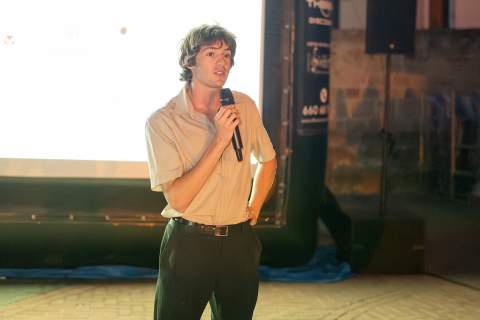
Rafa Ronchera stated that each year, the results of the new excavations are more satisfactory and emphasised the discovery of the mural paintings in the Xivert castle, the only ones discovered in Castellón, and which have placed Alcala-Alcossebre in the archaeological panorama, thanks to the cooperation of the Castellón Diputación. The paintings remained because of a collapse of the room in which they were found and the later silting of materials, which buried them and protected them from the effects of the elements or human beings, so that they survived until our times, although with evident deterioration. To restore them, urgent photos were taken, with the intention of dating the discovery, until Alcala-Alcossebre Council financed the photographic study using new technology, by the Valencia Politechnic University, which brought to light the hidden pigment.
However, the collection curator and guide for the local archaeological heritage, assured people that “we want more”, as there still exist many very interesting projects to develop in the different layers, which must be learnt about.
From the start, year after year, spreading this archaeological heritage has been one of the main aims, having informed people in the town, interested in its heritage and all the discoveries which have been made, about something unprecedented in the archaeological world, which has been specially emphasised and presented as an example and model to be followed by officers in the Diputación’s Archaeological and Prehistoric Investigations Service.
Speaking about the excavations which are starting in Santa Lucía, Ronchera said that three experts are taking part and they will be supported by the Madrid CESIC laboratories for the metal investigations. With this work, it is hoped that we shall find more sediments and the archaeological sequence which may establish some connection between the necropolis and the 3,000 year BC village.
The Xivert Templar mural
For 10 years, rain was washing the length of the Xivert Castle Muslim wall which was discovered after the area was excavated, when various burial sites, possibly Muslim, were discovered. Little by little the pigment was disappearing from the surface as the material to which it adhered was disintegrating, which started to give Rafa Ronchera clues that that outer wall hid something more. One day, in perfect conditions, he could see the first lines and then joined them up making out figures. This gave him the idea that it was essential to carry out an in depth investigation, which finally happened thanks to the financing by the Alcala-Alcossebre Council, and this, thanks to the work of the Polytechnic University yielded results.
As Rafa Ronchera explained, the paintings show the seeds of the consolidation of the Templar presence in Xivert and the importance of the order gave them the site. Possibly the new occupants of the castle, who conquered the strong square without shedding a drop of blood, wanted to leave proof of such a relevant deed for them such as taking possession of the fortress, so that they immediately wanted to start decorating what at that time was a great hall or dwelling with a mural. For this an artist from the Muslim community was required to provide his services to produce the work. This was carried out on a simple white-washed wall, on which the lines of the figures were first drawn with a fine stick forming the composition. Then the lines were filled in. It was all done with a red pigment made from rusted iron.
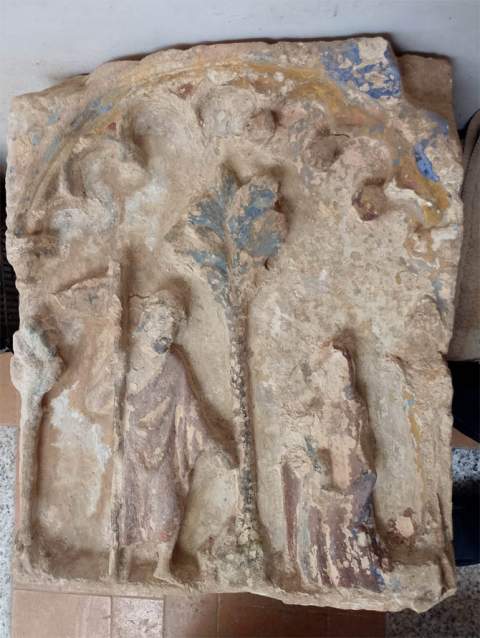
The result was a mural 5 metres long by 2 metres high, on the Muslim wall, to which a base of lime wash was applied to make the wall white. Currently there is only a section 5 metres high by 1 metre 10 centimetres wide which has been preserved, where the photos made by the UPV show a very stylised horseman with a shield, lance and helmet on horseback as well as what appears to be a military camp and part of the Xivert wall. However, from the interpretation of the pictures it can be worked out that it is the exact moment of the entrance to the castle once the square had yielded, with the unfolded standards and the horsement parading under them. Rafa Ronchers described it as a sort of comic which tells the history of the conquest in a series of sequential scenes, which could have been episodes in history which the Templars wanted to related through this mural painting.
The Alcala de Xivert Museum Collection opened a new exhibition on Saturday 9th June, in which two very important findings were the indisputable main attractions – the two globular pots with four handles from the Bronze Age recovered in the Santa Lucía site and the Templar paintings discovered on a stretch of wall in the Xivert Castle.
The event was presided over by the Alcala de Xivert-Alcossebre Council mayor, Francisco Juan Mars, the Culture councillor, María Agut, the director of the Museum Colection, Rafa Ronchera and the local festeras, who were tasked with uncovering the glass cabinet holding the new collection.
María Agut pointed out the great interest shown by the council in recent years in the conservation and rescue of the town’s historic and archaeological heritage, as well as in spreading this cultural wealth, which has been available to residents and visitors for seven years.
The Culture councillor thanked the Castellón Diputación for the support they have given to the projects and for having included the town and its heritage in the Archaeological Castellón and the Templar Mirador programmes. Spreading this heritage wealth, particularly to the town’s youngest children, is a preferential aim for the municipal government and therefore it has received the support of the Diputación with activities such as the Chrome Workshop held recently in the schools, when students could learn about the history of the Templar Knights.
Agut said that this year there will be more visits to the Santa Lucía site, because of the great demand and the interest aroused by the excavations, and used the opportunity to thank the Museum Collection coordinator, Rafa Ronchera, for his dedication and delivery of spreading the heritage which has made it an essential piece of all the actions undertaken.
Rafa Ronchera stated that each year, the results of the new excavations are more satisfactory and emphasised the discovery of the mural paintings in the Xivert castle, the only ones discovered in Castellón, and which have placed Alcala-Alcossebre in the archaeological panorama, thanks to the cooperation of the Castellón Diputación. The paintings remained because of a collapse of the room in which they were found and the later silting of materials, which buried them and protected them from the effects of the elements or human beings, so that they survived until our times, although with evident deterioration. To restore them, urgent photos were taken, with the intention of dating the discovery, until Alcala-Alcossebre Council financed the photographic study using new technology, by the Valencia Politechnic University, which brought to light the hidden pigment.
However, the collection curator and guide for the local archaeological heritage, assured people that “we want more”, as there still exist many very interesting projects to develop in the different layers, which must be learnt about.
From the start, year after year, spreading this archaeological heritage has been one of the main aims, having informed people in the town, interested in its heritage and all the discoveries which have been made, about something unprecedented in the archaeological world, which has been specially emphasised and presented as an example and model to be followed by officers in the Diputación’s Archaeological and Prehistoric Investigations Service.
Speaking about the excavations which are starting in Santa Lucía, Ronchera said that three experts are taking part and they will be supported by the Madrid CESIC laboratories for the metal investigations. With this work, it is hoped that we shall find more sediments and the archaeological sequence which may establish some connection between the necropolis and the 3,000 year BC village.
The Xivert Templar mural
For 10 years, rain was washing the length of the Xivert Castle Muslim wall which was discovered after the area was excavated, when various burial sites, possibly Muslim, were discovered. Little by little the pigment was disappearing from the surface as the material to which it adhered was disintegrating, which started to give Rafa Ronchera clues that that outer wall hid something more. One day, in perfect conditions, he could see the first lines and then joined them up making out figures. This gave him the idea that it was essential to carry out an in depth investigation, which finally happened thanks to the financing by the Alcala-Alcossebre Council, and this, thanks to the work of the Polytechnic University yielded results.
As Rafa Ronchera explained, the paintings show the seeds of the consolidation of the Templar presence in Xivert and the importance of the order gave them the site. Possibly the new occupants of the castle, who conquered the strong square without shedding a drop of blood, wanted to leave proof of such a relevant deed for them such as taking possession of the fortress, so that they immediately wanted to start decorating what at that time was a great hall or dwelling with a mural. For this an artist from the Muslim community was required to provide his services to produce the work. This was carried out on a simple white-washed wall, on which the lines of the figures were first drawn with a fine stick forming the composition. Then the lines were filled in. It was all done with a red pigment made from rusted iron.
The result was a mural 5 metres long by 2 metres high, on the Muslim wall, to which a base of lime wash was applied to make the wall white. Currently there is only a section 5 metres high by 1 metre 10 centimetres wide which has been preserved, where the photos made by the UPV show a very stylised horseman with a shield, lance and helmet on horseback as well as what appears to be a military camp and part of the Xivert wall. However, from the interpretation of the pictures it can be worked out that it is the exact moment of the entrance to the castle once the square had yielded, with the unfolded standards and the horsement parading under them. Rafa Ronchers described it as a sort of comic which tells the history of the conquest in a series of sequential scenes, which could have been episodes in history which the Templars wanted to related through this mural painting.