The Alcala de Xivert Serra d’Irta IES is holding the Spanish Meeting of the Erasmus+ European project “Strategies Preventing Early School Leaving”
![[Img #71797]](http://el7set.es/upload/images/04_2019/4364_5712_img_5008.jpg)
The Spanish Meeting of the Erasmus+ European project is being held in Alcala de Xivert between the 8th and 12th April. Taking part in the discussions are education centres from Italy, Turkey, Rumania and Portugal as well as Spain.
During the week, teachers from the participating centres will present activities based on the main theme of “Preventing Early School Leaving”.
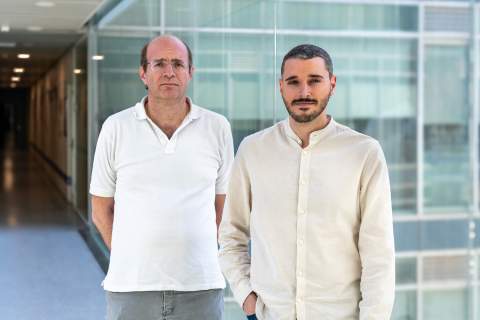
During the opening event, held on Monday, 8th April in the IES Serra d’Irta gymnasium in Alcala de Xivert, members of the educational community, led by the school’s head, David Martínez, with the Alcala de Xivert-Alcossebre Council represented by the Education councillor, María Agut, present.
Strategies Preventing Early School Leaving (SPESL) is a project financed completely by the European Union within the Erasmus+ programme, key action KA2 229, which began on 1st September 2018 and planned to be complete by 30th May 2020. It was created by 6 institutes and 5 different countries. For 2 years, work has been carried out collaboratively aiming at preventing early school leaving.
This project aims to involve families, educational administrations – which are supplying technical support to the project –, pupils – who will carry out the principal tasks –, and teachers – who will assess, coordinate and guide.
The activities included in the project are cultural exchange (dance, meals, traditions and language), three paper reviews to show the pupils’ work, an up-dated digital review, a map of skills or Skill Map and the Students Council.
This last activity, the Students Council, considers the project’s key action. Volunteer pupils create a Council and elect a governing body (chairman, vice-chairman and secretary), the Council draws up a list of reasons for this failure in their educational centre, and then academically assesses those pupils with difficulties in following the curriculum programme. The volunteer teacher allows the Council pupils to have sufficient time to carry out their tasks. The Council is setting up concrete actions to help the apprenticeship. At each stage, several members of the Council from each country meet with the other countries to explain their tasks and conclusions. The council also designs opinion polls to establish the skills which make pupils want to leave education early.
Taking part in this project are the Scoala Gimnaziala Romanu Braila (Rumanía), Istituto Comprensivo Statale Leonardo Da Vinci Monteiasi (Taranto, Italy), Colégio Atlântico, lda (Portugal), Mesleki ve Teknik Egitim Merkezi (Emirdag, Turkey), Ataturk Ortaokulu (Nevsehir, Turkey), and IES Serra d’Irta (Alcalà de Xivert, Spain).
The head teacher of the IES Serra d’Irta, David Martínez, pointed out that the main objective of the foreign teachers who came to the Spanish Meeting organised by the IES Serra d’Irta within the Erasmus+ European project “Strategies Preventing Early School Leaving” is training in strategies to resolve conflicts and the detection and treatment of early school leaving.
First, they are forming a Teaching Among Equals (TEI) school programme. The TEI programme aims to prevent and act upon bullying in schools. This programme involves the whole education community and also aims to promote good relationships and facilitate the integration of pupils who come from the schools, as well as giving a voice to the pupils and actively involving them in the peaceful wellbeing of the institute.
During September and October, there will be information/training sessions for the pupils in years 1 and 3 of ESO and FP, to make them aware of school bullying. Then there will be a session of training for pupils who will be a tutor, to give them the useful tools to be able to act against school bullying. Then they will be paired with a recently arrived pupil and a pupil from the third year and their work will be during the whole school course. Diplomas will be presented to every pupil/tutor in recognition of their work.
Secondly, they will train in the Individual Tutor programme. This programme will provide individual continuity for a pupil who needs the attention from a teacher with no class to give. It is of a voluntary and informal nature regarding timetable and space in which to carry out the interviews, although it is properly designed and structured.
Thirdly there will be training in School Mediation. This is a strategy for the peaceful resolution of conflicts. Mediation contributes to regular living together in the centre, developing attitudes and positive relationship skills, preventing violence, intervening constructively in the face of conflict, leading to responsible resolution and reconciliation between people. With all this, the improvement in the climate of the centre should coincide positively with the rest of the educational activities.
Fourthly, they will receive training on detection and resolution of possible vulnerable family situations. In this section they will be taught how to detect possible indications that show up delicate family situations and give them strategies to try to resolve, or at least relieve, these situations.
Finally, the results of the SPESL will be announced in the IES Serra d’Irta. The participating pupils have carried out a whole series of interviews with pupils who presented situations leading to leaving school in the centre. On the one hand, they have detected the causes which ended up in a pupil abandoning their studies. Secondly, they have designed a continuity system and school reinforcement on the part of the participating pupils regarding pupils planning to leave, aiming to try to reverse the situation.
The Spanish Meeting of the Erasmus+ European project is being held in Alcala de Xivert between the 8th and 12th April. Taking part in the discussions are education centres from Italy, Turkey, Rumania and Portugal as well as Spain.
During the week, teachers from the participating centres will present activities based on the main theme of “Preventing Early School Leaving”.
During the opening event, held on Monday, 8th April in the IES Serra d’Irta gymnasium in Alcala de Xivert, members of the educational community, led by the school’s head, David Martínez, with the Alcala de Xivert-Alcossebre Council represented by the Education councillor, María Agut, present.
Strategies Preventing Early School Leaving (SPESL) is a project financed completely by the European Union within the Erasmus+ programme, key action KA2 229, which began on 1st September 2018 and planned to be complete by 30th May 2020. It was created by 6 institutes and 5 different countries. For 2 years, work has been carried out collaboratively aiming at preventing early school leaving.
This project aims to involve families, educational administrations – which are supplying technical support to the project –, pupils – who will carry out the principal tasks –, and teachers – who will assess, coordinate and guide.
The activities included in the project are cultural exchange (dance, meals, traditions and language), three paper reviews to show the pupils’ work, an up-dated digital review, a map of skills or Skill Map and the Students Council.
This last activity, the Students Council, considers the project’s key action. Volunteer pupils create a Council and elect a governing body (chairman, vice-chairman and secretary), the Council draws up a list of reasons for this failure in their educational centre, and then academically assesses those pupils with difficulties in following the curriculum programme. The volunteer teacher allows the Council pupils to have sufficient time to carry out their tasks. The Council is setting up concrete actions to help the apprenticeship. At each stage, several members of the Council from each country meet with the other countries to explain their tasks and conclusions. The council also designs opinion polls to establish the skills which make pupils want to leave education early.
Taking part in this project are the Scoala Gimnaziala Romanu Braila (Rumanía), Istituto Comprensivo Statale Leonardo Da Vinci Monteiasi (Taranto, Italy), Colégio Atlântico, lda (Portugal), Mesleki ve Teknik Egitim Merkezi (Emirdag, Turkey), Ataturk Ortaokulu (Nevsehir, Turkey), and IES Serra d’Irta (Alcalà de Xivert, Spain).
The head teacher of the IES Serra d’Irta, David Martínez, pointed out that the main objective of the foreign teachers who came to the Spanish Meeting organised by the IES Serra d’Irta within the Erasmus+ European project “Strategies Preventing Early School Leaving” is training in strategies to resolve conflicts and the detection and treatment of early school leaving.
First, they are forming a Teaching Among Equals (TEI) school programme. The TEI programme aims to prevent and act upon bullying in schools. This programme involves the whole education community and also aims to promote good relationships and facilitate the integration of pupils who come from the schools, as well as giving a voice to the pupils and actively involving them in the peaceful wellbeing of the institute.
During September and October, there will be information/training sessions for the pupils in years 1 and 3 of ESO and FP, to make them aware of school bullying. Then there will be a session of training for pupils who will be a tutor, to give them the useful tools to be able to act against school bullying. Then they will be paired with a recently arrived pupil and a pupil from the third year and their work will be during the whole school course. Diplomas will be presented to every pupil/tutor in recognition of their work.
Secondly, they will train in the Individual Tutor programme. This programme will provide individual continuity for a pupil who needs the attention from a teacher with no class to give. It is of a voluntary and informal nature regarding timetable and space in which to carry out the interviews, although it is properly designed and structured.
Thirdly there will be training in School Mediation. This is a strategy for the peaceful resolution of conflicts. Mediation contributes to regular living together in the centre, developing attitudes and positive relationship skills, preventing violence, intervening constructively in the face of conflict, leading to responsible resolution and reconciliation between people. With all this, the improvement in the climate of the centre should coincide positively with the rest of the educational activities.
Fourthly, they will receive training on detection and resolution of possible vulnerable family situations. In this section they will be taught how to detect possible indications that show up delicate family situations and give them strategies to try to resolve, or at least relieve, these situations.
Finally, the results of the SPESL will be announced in the IES Serra d’Irta. The participating pupils have carried out a whole series of interviews with pupils who presented situations leading to leaving school in the centre. On the one hand, they have detected the causes which ended up in a pupil abandoning their studies. Secondly, they have designed a continuity system and school reinforcement on the part of the participating pupils regarding pupils planning to leave, aiming to try to reverse the situation.